
©2026 Digitalhound London. Registered in England & Wales 09302377

Contact Us
Tel: +44 (0)20 7873 2476
Address: 207 Regent Street
London
W1B 3HH
United Kingdom
”
MORE SEO CASE STUDIES…
118118.com






ECOMMERCE SEO CASE STUDY
How we helped Alza grow
high-intent organic traffic and
improve revenue-ready visibility
This case study outlines the exact technical, content, and authority work
used to turn inconsistent ecommerce performance into predictable growth
across commercial categories.
Sector: eCommerce
Focus: Revenue keywords,
category growth
Markets: UK and Germany
Commercial Efficiency:
UK Average Order Value: +32.09%
Germany Transactions: +78.89%
User Growth:
UK Sessions: +23.93%
UK Users: +26.27%
Germany Sessions: +37.63%
The Challenge
Alza had strong products and a credible brand, but organic performance was inconsistent. Some categories performed well while others plateaued, and growth was constrained by a mix of technical friction, thin commercial coverage, and weak internal pathways for high-intent traffic. • Category pages not capturing the full breadth of commercial intent • Indexation and crawl budget wasted across low-value URLs • Internal linking not directing authority to priority categories • Content not aligned to how buyers actually search • Authority signals not concentrated where revenue livesOur approach
We applied an e-commerce-first SEO framework built around three pillars. Each pillar removes a different growth ceiling, and together they create compounding gains.
What we actually did
Outcomes (first 6 months):
Revenue Growth
Germany: +44.89%
UK: +34.19%
Organic Traffic
Search Growth:
UK: +38.81%
Germany: +23.06%
Commercial visibility that translates into revenue
Category page growth without cannibalisation
Predictable performance against seasons and promotions
Search demand capture at every stage of intent
What we optimised for
1) Technical foundations
•
Indexation and crawl control for large
catalogues
•
Template improvements for
categories and PDPs (where
applicable)
•
Canonicalisation, parameter handling,
and duplication controls
•
Core Web Vitals basics and page
speed hygiene
2) Demand capture content
•
Category page intent mapping and
on-page restructuring
•
Commercial subcategory expansion
based on search behaviour
•
Supporting guides that feed the
money pages, not vanity blogs
•
Copy improvements to reduce
bounce and improve conversion
intent
3) Authority and trust
•
Authority distribution to priority
categories
•
Digital PR style placements aligned
to product and sector relevance
•
Clean link acquisition designed to
withstand scrutiny
•
Entity reinforcement across key
brand signals (where needed)
Technical
•
Resolved index bloat and tightened
crawl priorities
•
Reviewed duplication patterns across
catalogue URLs
•
Improved internal linking architecture
for top categories
•
Identified and removed friction
points affecting discovery
Content and structure
•
Rebuilt key category pages around
buyer intent
•
Introduced subcategory coverage
to capture long-tail demand
•
Added supporting content that
funnels into categories
•
Improved page layouts for
scannability and conversion cues
Authority
•
Secured relevant editorial links to
priority sections
•
Balanced brand and commercial
anchors naturally
•
Strengthened topical relevance via
contextual placements
•
Focused on quality and longevity,
not volume
Key principle
Ecommerce growth usually breaks when traffic is treated as the goal. We optimised for commercial intent and authority flow into
the pages that actually drive revenue. Learn how moving from a visibility-first model to a revenue-first ecommerce SEO strategy
ensures that search authority is concentrated on high-margin “revenue corridors”.
Proof and outcomes
The result was a more stable performance profile across priority categories, stronger commercial keyword coverage, and a clearer path
from search demand to revenue.
“We chose to work with Digitalhound
because they offer us the right level
of marketing expertise, great
communication and a closely shared
view of how we want to develop
our brand going forward”
Jiri Maly, International Marketing Director
Alza


Struggling to Compete in a
Competitive Local Market?
Book a free 30-minute consultation and get clear, practical
SEO advice tailored to your market.
No obligation. No sales pressure. Actionable recommendations.
Why This Approach Works For Ecommerce
It respects catalogue reality
Indexation control, duplication prevention,
and crawl prioritisation are treated as core
levers, not afterthoughts.
It builds money-page relevance
Category pages become the centre of
gravity, supported by content that drives
buying intent, not vanity metrics.
It concentrates authority
Authority is directed into revenue-
producing sections so rankings translate
into measurable commercial outcomes.
FAQ
1.
What type of ecommerce sites do you
typically support?
We support established ecommerce businesses
that need predictable organic growth across
categories, including retailers, marketplaces, and
niche product brands.
2.
How long does ecommerce SEO take to
show meaningful results?
It depends on starting position and catalogue
complexity. Early wins can appear within weeks,
but compounding gains typically build over 3 to 6
months.
3.
Do you focus on traffic or revenue?
Revenue-ready demand. Traffic is useful only when
it is aligned to commercial intent and the internal
pathway supports conversion.
3. Do you focus on traffic or revenue?
Revenue-ready demand. Traffic is useful only
when it is aligned to commercial intent and the
internal pathway supports conversion.
4. Do you offer fixed packages?
No. We scope work around commercial impact,
catalogue size, and the growth ceiling we are
removing.
Want this framework applied to
your ecommerce site?
If you share your site and your priority categories, we will
tell you where the growth ceiling is and what removing it looks like.
Quick Fit Check
•
Established Ecommerce Business
•
Multiple Categories Or Product Lines
•
Ambition To Grow Non-brand Commercial Demand
•
Wants Predictable Growth, Not Random Wins
SEO growth in a competitive consumer
market.
Organic visibility uplift for a travel brand.
SEO strategy driving qualified traffic and
leads.
More Case Studies
From page 5 obscurity in Google to
dominant Top 3 local visibility.
Contextual explanation:
While average order value in Germany decreased by 24.24%, this was offset by a 78.89% increase in transactions, resulting in a net
44.89% uplift in revenue within six months.
Additional context:
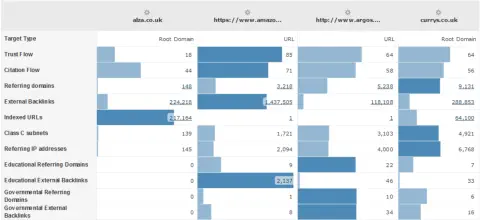
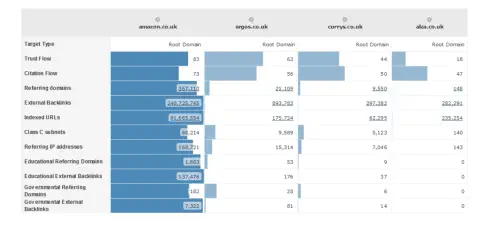
Growth was delivered in highly competitive markets, including competition from Amazon and Curry’s.


©2026 Digitalhound London.
Registered in England & Wales 09302377


ECOMMERCE SEO CASE STUDY
How we helped Alza grow
high-intent organic traffic and
improve revenue-ready visibility
This case study outlines the exact technical, content, and
authority work used to turn inconsistent ecommerce
performance into predictable growth across commercial
categories.
Sector: eCommerce
Focus: Revenue keywords,
category growth
Markets: UK and Germany
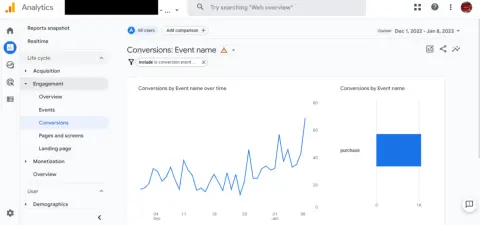
Outcomes (first 6 months):
Revenue Growth
Germany: +44.89%
UK: +34.19%
Organic Traffic
Search Growth:
UK: +38.81%
Germany: +23.06%
User Growth:
UK Sessions: +23.93%
UK Users: +26.27%
Germany Sessions: +37.63%
Commercial Efficiency:
UK Average Order Value: +32.09%
Germany Transactions: +78.89%
Contextual explanation:
While average order value in Germany decreased
by 24.24%, this was offset by a 78.89% increase in
transactions, resulting in a net 44.89% uplift in
revenue within six months.
Additional context:
Growth was delivered in highly competitive
markets, including competition from Amazon and
Curry’s.
The Challenge
Alza had strong products and a credible brand, but organic performance was inconsistent. Some categories performed well while others plateaued, and growth was constrained by a mix of technical friction, thin commercial coverage, and weak internal pathways for high-intent traffic. • Category pages not capturing the full breadth of commercial intent • Indexation and crawl budget wasted across low-value URLs • Internal linking not directing authority to priority categories • Content not aligned to how buyers actually search • Authority signals not concentrated where revenue lives
Commercial visibility that translates into revenue
Category page growth without cannibalisation
Predictable performance against seasons and
promotions
Search demand capture at every stage of intent
What we optimised for
Our approach
We applied an e-commerce-first SEO framework built around three pillars. Each pillar removes a different growth ceiling, and together they create compounding gains.
1) Technical foundations
•
Indexation and crawl control for large
catalogues
•
Template improvements for
categories and PDPs (where
applicable)
•
Canonicalisation, parameter handling,
and duplication controls
•
Core Web Vitals basics and page
speed hygiene
2) Demand capture content
•
Category page intent mapping and
on-page restructuring
•
Commercial subcategory expansion
based on search behaviour
•
Supporting guides that feed the
money pages, not vanity blogs
•
Copy improvements to reduce
bounce and improve conversion
intent
3) Authority and trust
•
Authority distribution to priority
categories
•
Digital PR style placements aligned
to product and sector relevance
•
Clean link acquisition designed to
withstand scrutiny
•
Entity reinforcement across key
brand signals (where needed)
What we actually did
Technical
•
Resolved index bloat and tightened
crawl priorities
•
Reviewed duplication patterns across
catalogue URLs
•
Improved internal linking architecture
for top categories
•
Identified and removed friction
points affecting discovery
Content and structure
•
Rebuilt key category pages around
buyer intent
•
Introduced subcategory coverage
to capture long-tail demand
•
Added supporting content that
funnels into categories
•
Improved page layouts for
scannability and conversion cues
Authority
•
Secured relevant editorial links to
priority sections
•
Balanced brand and commercial
anchors naturally
•
Strengthened topical relevance via
contextual placements
•
Focused on quality and longevity,
not volume
Key principle
Ecommerce growth usually breaks when traffic is
treated as the goal.
We optimised for commercial intent and authority
flow into the pages that actually drive revenue.
Learn how moving from a visibility-first model to a
revenue-first ecommerce SEO strategy ensures
that search authority is concentrated on
high-margin revenue corridors.
Proof and outcomes
The result was a more stable performance profile
across priority categories, stronger commercial
keyword coverage, and a clearer path from search
demand to revenue.
“We chose to work with Digitalhound
because they offer us the right level
of marketing expertise, great
communication and a closely shared
view of how we want to develop
our brand going forward”
Jiri Maly, International Marketing Director
Alza

Why This Approach Works
For Ecommerce
It respects catalogue reality
Indexation control, duplication prevention,
and crawl prioritisation are treated as core
levers, not afterthoughts.
It builds money-page relevance
Category pages become the centre of
gravity, supported by content that drives
buying intent, not vanity metrics.
It concentrates authority
Authority is directed into revenue-
producing sections so rankings translate
into measurable commercial outcomes.
FAQ
1.
What type of ecommerce sites do
you typically support?
We support established ecommerce
businesses that need predictable organic
growth across categories, including retailers,
marketplaces, and niche product brands.
2.
How long does ecommerce SEO
take to show meaningful results?
It depends on starting position and
catalogue complexity. Early wins can appear
within weeks, but compounding gains
typically build over 3 to 6 months.
3.
Do you focus on traffic or revenue?
Revenue-ready demand. Traffic is useful only
when it is aligned to commercial intent and
the internal pathway supports conversion.
4. Do you focus on traffic or revenue?
Revenue-ready demand. Traffic is useful only
when it is aligned to commercial intent and
the internal pathway supports conversion.
5. Do you offer fixed packages?
No. We scope work around commercial
impact, catalogue size, and the growth ceiling
we are removing.
Want this framework
applied to your
e-commerce site?
If you share your site and your priority categories,
we will tell you where the growth ceiling is and
what removing it looks like.
Quick Fit Check
•
Established Ecommerce Business
•
Multiple Categories Or Product Lines
•
Ambition To Grow Non-brand Commercial Demand
•
Wants Predictable Growth, Not Random Wins
Struggling to Compete in a
Competitive Local Market?
Book a free 30-minute consultation and get
clear, practical SEO advice tailored to your
market.
No obligation. No sales pressure. Actionable
recommendations.
More Case Studies
SEO strategy driving qualified traffic and
leads.
From page 5 obscurity in Google to
dominant Top 3 local visibility.
SEO growth in a competitive consumer
market.
Organic visibility uplift for a travel brand.


- HOME
- SEO CONSULTING
- CHEAP SEO SERVICES
- SOCIAL MEDIA MARKETING
- DIGITAL MARKETING
- PAY PER CLICK
- LINK BUILDING SERVICES
- VIDEO MARKETING SERVICES
- ABOUT
- CONTACT
- SMALL BUSINESS DIGITAL
- CONTENT MARKETING SERVICES
- PRESS RELEASE SERVICES
- DATA SEGMENTATION
- BUSINESS CHANGE
- FREE OPTIMIZATION TOOLS
- CONVERSION RATE OPTIMIZATION
- ECOMMERCE MARKETING
- MOBILE MARKETING SERVICES
- BRAND MARKETING
- SEO PACKAGES
- PRIVACY POLICY
- BLOG
- SITE MAP